
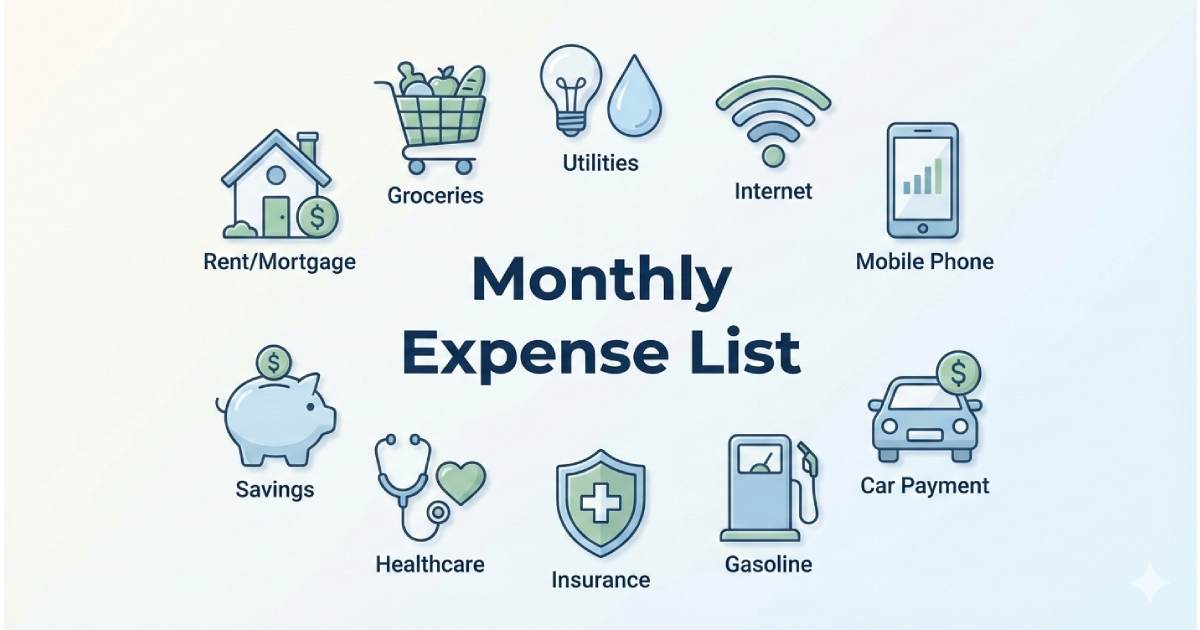
Creating or updating a monthly budget often feels harder than it should, mostly because it’s easy to overlook small but important expenses. Missing just a few costs can quietly throw off your entire spending plan, making it harder to save money and avoid financial stress.
To help you stay organized and in control, we’ve compiled a comprehensive list of 40+ monthly expenses you should include in your budget. Use it as a complete checklist to review your spending, spot gaps in your budget, and plan with confidence going forward.
Let’s dive into a common monthly expenses list that every budget should cover.
Types of Monthly Expenses
When building a budget, it helps to group expenses by how they behave rather than just listing them. Most monthly costs fall into three main categories: fixed, variable, and irregular. Understanding these categories makes your budget easier to manage and more realistic.
Fixed Expenses
Fixed expenses are costs that stay the same every month and are usually essential. Because they’re predictable, they form the base of your budget and are often the easiest to plan for.
Variable Expenses
Variable expenses change from month to month depending on usage, habits, or lifestyle. These costs are more flexible but also easier to overspend on if they aren’t tracked regularly.
Irregular Expenses
Irregular expenses don’t occur every month, but they still need to be included in your budget. Planning for them in advance helps prevent unexpected financial stress and keeps your spending on track over time.
Common Monthly Expenses List
Here is a list of common monthly expenses to help you create a budget accurately and avoid missing important costs.
1. Rent or Mortgage
Rent or mortgage is usually the largest monthly expense for most US households. This payment goes to a landlord in the case of rent, while a mortgage represents a loan repayment for homeowners. Your mortgage payment typically includes principal and interest, and may also cover property taxes and insurance if paid through an escrow account. Housing costs can vary widely depending on the location, home size, and type of property.
Average Cost
Rent: The average monthly rent in the US is around $1,500, though it can range from $800 in smaller towns to over $3,000 in major cities.
Mortgage: The average monthly mortgage payment is approximately $1,600, including principal and interest, with property taxes and insurance often adding $200–$400 more per month.
Why it matters
Housing costs often take up 25–35% of a household’s monthly budget. Paying too much or missing payments can throw off your entire financial plan. Planning carefully for your rent or mortgage ensures you have enough left for savings, utilities, and other essential expenses.
2. Property Taxes
Property taxes are taxes homeowners pay to local governments based on their property value. These taxes help fund schools, public services, roads, and other community needs. Many homeowners pay property taxes as part of their mortgage via an escrow account, but some pay directly to the county or city.
Average Cost
Property taxes are often included in your mortgage payment through an escrow account. If not, the average US homeowner pays around $3,500 per year, which is about $290 per month, though this varies depending on the state, city, and property value.
Why it matters
Even when included in a mortgage, knowing your property tax amount helps you understand your housing costs. For those paying separately, missing a payment can lead to large, unexpected bills and penalties, making accurate budgeting essential.
3. Homeowners or Renters Insurance
Insurance protects your home or rental property against damage, theft, and liability. Homeowners insurance also covers the structure of your home, while renters insurance covers personal belongings and liability. Even small damages or thefts can lead to substantial costs without insurance.
Average Cost
Homeowners Insurance: Around $1,200 per year on average (approximately $100 per month).
Renters Insurance: Around $180 per year (approximately $15 per month).
Why it matters
Insurance provides financial security and peace of mind. Without it, even minor accidents or damages could result in expensive out-of-pocket payments. Including insurance in your budget ensures you’re prepared for unexpected events.
4. HOA Fees
Homeowners Association (HOA) fees are monthly charges in certain communities or condos. They often cover maintenance of shared spaces, landscaping, security, and community amenities like pools or gyms.
Average Cost
HOA fees typically range from $200 to $400 per month, but luxury communities may charge higher amounts.
Why it matters
HOA fees are mandatory in many communities. Forgetting to budget for them can lead to financial stress. Understanding these fees upfront helps you accurately plan your total housing expenses.
5. Electricity
Electricity powers your home’s essential appliances, lighting, heating, and cooling systems. Your bill depends on usage, local rates, home size, and energy efficiency. Many households see higher bills during the summer or winter months when air conditioning or heating systems run continuously.
Average Cost
The average US household pays around $130 per month for electricity, though this can range from $80 in temperate regions to over $200 in areas with extreme temperatures or larger homes.
Why it matters
Electricity is a non-negotiable utility that keeps your home functional and comfortable. Budgeting accurately for electricity prevents surprise bills and helps you identify opportunities to reduce energy consumption and save money over time.
6. Natural Gas or Heating
Natural gas is commonly used for heating homes, water heaters, stoves, and dryers. In some regions, households rely on heating oil or propane instead. Heating costs fluctuate seasonally, with winter months typically seeing the highest usage and expenses.
Average Cost
The average monthly natural gas bill is around $70, though winter months can push this to $100–$150 or higher. Heating oil or propane users may spend $150–$300 per month during peak heating season.
Why it matters
Heating is essential for comfort and safety, especially in colder climates. Planning for seasonal variations in your heating costs helps you avoid budget shortfalls during winter months when bills spike significantly.
7. Water, Sewer & Trash
Water, sewer, and trash services are essential utilities that maintain hygiene and sanitation in your home. These bills cover the cost of clean water supply, wastewater treatment, and regular waste removal. In many areas, all three services are bundled together on a single monthly bill.
Average Cost
The average combined cost for water, sewer, and trash services is around $70–$100 per month, though this varies by location and household size. Urban areas typically charge more than rural communities.
Why it matters
These utilities are essential for daily living and health. While they may seem small compared to rent or mortgage, they add up quickly and must be paid regularly. Budgeting for them prevents service interruptions and late fees.
8. Internet
Internet service has become essential for work, education, entertainment, and communication. Most households rely on broadband internet for remote work, streaming, online banking, and staying connected. Internet speeds and prices vary based on your provider and the plan you choose.
Average Cost
The average monthly internet bill in the US is around $60–$80 for standard broadband service. High-speed fiber or premium plans can cost $100–$150 per month.
Why it matters
Reliable internet is crucial for modern living, especially if you work from home or have children in school. Budgeting for internet ensures you maintain connectivity without overspending on unnecessary speed tiers or features you don’t use.
9. Mobile Phone
Mobile phone service includes your monthly plan for calls, texts, and data. Most people have individual or family plans with major carriers or budget providers. Costs vary based on data allowances, number of lines, and whether you’re financing a phone through your carrier.
Average Cost
Individual plans average $50–$80 per month, while family plans can range from $100–$200, depending on the number of lines. Budget carriers often offer plans for $25–$40 per line with similar coverage.
Why it matters
Mobile phone service is essential for communication, work, and emergencies. Reviewing your plan regularly ensures you’re not overpaying for data or features you don’t need, helping you optimize this recurring expense.
10. Cable TV or Streaming Services
Entertainment services include traditional cable TV, satellite TV, and streaming platforms like Netflix, Hulu, Disney+, and others. Many households have cut cable in favor of multiple streaming subscriptions, which can add up quickly when combined.
Average Cost
Cable TV averages $100–$150 per month, while individual streaming services range from $8–$20 per month. Households with multiple streaming subscriptions often spend $50–$80 monthly on entertainment.
Why it matters
Entertainment subscriptions are easy to accumulate and forget about. Regularly reviewing what you actually watch helps you eliminate unused services and keep entertainment costs under control without sacrificing your favorite content.
11. Groceries
Groceries cover the food and household items you purchase for home consumption. This includes fresh produce, meat, dairy, pantry staples, cleaning supplies, and paper products. Grocery costs vary based on family size, dietary preferences, and shopping habits.
Average Cost
The average US household spends $400–$600 per month on groceries, with single-person households averaging $250–$350 and larger families spending $800–$1,000 or more.
Why it matters
Groceries are one of the most flexible expenses in your budget. Tracking what you spend helps you identify waste, plan meals more efficiently, and make adjustments when you need to cut costs elsewhere.
12. Dining Out
Dining out includes restaurant meals, fast food, coffee shops, and takeout orders. While occasional meals out are enjoyable and convenient, frequent restaurant visits can quickly strain your budget without you realizing how much you’re actually spending.
Average Cost
The average household spends $250–$350 per month on dining out, though this varies widely based on lifestyle and location. Urban dwellers and frequent restaurant-goers may spend $500 or more monthly.
Why it matters
Dining out is often one of the easiest areas to overspend without tracking. Being mindful of restaurant expenses helps you enjoy meals out while maintaining financial discipline and leaving room for savings goals.
13. Car Payment
A car payment is the monthly installment you pay on an auto loan when you finance a vehicle purchase. Loan terms typically range from 36 to 72 months, with monthly payments depending on the vehicle price, down payment, interest rate, and loan length.
Average Cost
The average monthly car payment is around $500–$700 for new vehicles and $350–$500 for used vehicles, though luxury cars and longer loan terms can push payments higher.
Why it matters
Car payments are a significant fixed expense that impacts your budget for years. Understanding the total cost of vehicle ownership, including interest, helps you make smarter purchasing decisions and avoid overextending yourself financially.
14. Gasoline
Gasoline is the fuel cost for driving your vehicle. Your monthly gas expenses depend on how much you drive, your vehicle’s fuel efficiency, and current gas prices in your area. Commuters typically spend more time than those who work from home or use public transit.
Average Cost
The average driver spends $150–$250 per month on gasoline, though long commutes or fuel-inefficient vehicles can push this to $300–$400 or higher.
Why it matters
Gas prices fluctuate regularly and can significantly impact your monthly budget. Tracking your fuel expenses helps you identify opportunities to reduce driving, carpool, or consider more fuel-efficient transportation options.
15. Auto Insurance
Auto insurance is legally required in most states and protects you financially in case of accidents, theft, or damage to your vehicle. Your premium depends on factors like your driving record, location, vehicle type, coverage level, and deductible amount.
Average Cost
The average monthly auto insurance premium is around $150–$200 for full coverage, though young drivers and those in urban areas may pay $250–$400 or more.
Why it matters
Auto insurance is mandatory and protects you from devastating financial losses. Shopping around for quotes and maintaining a clean driving record can help you secure better rates and keep this essential expense manageable.
16. Vehicle Maintenance & Repairs
Vehicle maintenance includes routine services like oil changes, tire rotations, brake inspections, and fluid replacements. Repairs cover unexpected fixes for mechanical issues, worn parts, or accident damage. Regular maintenance prevents costly repairs down the road.
Average Cost
The average vehicle owner spends $100–$150 per month on maintenance and repairs when averaged over the year. Setting aside $100 monthly creates a buffer for both routine service and unexpected repairs.
Why it matters
Skipping maintenance to save money often leads to expensive repairs later. Budgeting for vehicle upkeep keeps your car running safely and reliably while preventing financial emergencies when major repairs become necessary.
17. Public Transportation
Public transportation includes buses, trains, subways, and other transit systems. Many commuters use public transit instead of driving to save on gas, parking, and vehicle wear. Monthly passes often provide better value than individual tickets for regular riders.
Average Cost
Monthly public transportation costs range from $70–$150, depending on your city and transit system. Major metropolitan areas like New York or San Francisco typically charge more than smaller cities.
Why it matters
For urban residents and commuters, public transit offers a cost-effective alternative to vehicle ownership. Even if you have a car, using transit occasionally can reduce your overall transportation costs significantly.
18. Parking & Tolls
Parking expenses include monthly parking permits, garage fees, metered parking, and toll roads. City dwellers often pay for residential parking or workplace parking, while commuters may face daily tolls or parking fees at their destination.
Average Cost
Monthly parking costs vary widely from $50 in suburban areas to $300–$500 in major cities. Commuters using toll roads may spend an additional $50–$150 per month on tolls.
Why it matters
Parking and tolls are easy to overlook but add up quickly, especially for daily commuters. Factoring these costs into your transportation budget helps you evaluate whether alternative routes or parking options might save money.
19. Health Insurance
Health insurance covers medical expenses, including doctor visits, hospital stays, prescriptions, and preventive care. Most people get coverage through employers, government programs, or private marketplace plans. Premiums vary based on your plan type, coverage level, and whether you cover family members.
Average Cost
Individual health insurance premiums average $450–$600 per month for marketplace plans, though employer-sponsored plans typically have lower employee contributions of $100–$300 monthly. Family coverage can cost $1,200–$1,800 or more.
Why it matters
Health insurance protects you from catastrophic medical bills that could devastate your finances. Even if premiums seem high, going without coverage puts you at risk for tens of thousands in medical debt from a single illness or accident.
20. Medical & Prescription Costs
Medical and prescription costs include copays, deductibles, coinsurance, and out-of-pocket expenses not covered by insurance. This covers doctor visits, specialist appointments, emergency care, medical tests, and prescription medications.
Average Cost
The average household spends $150–$300 per month on medical and prescription costs after insurance. Those with chronic conditions or high-deductible plans may spend $400–$600 or more monthly.
Why it matters
Healthcare expenses can be unpredictable and strain your budget. Setting aside money monthly for medical costs creates a cushion for unexpected illnesses or ongoing treatment needs without derailing your financial plan.
21. Dental Care
Dental care includes routine cleanings, exams, X-rays, and necessary procedures like fillings, crowns, or root canals. Many dental insurance plans cover preventive care fully but require copays or coinsurance for major work.
Average Cost
With insurance, most people spend $30–$60 per month on dental care when averaged over the year. Without insurance, budgeting $50–$100 monthly helps cover routine visits and unexpected dental work.
Why it matters
Dental health affects your overall well-being, and neglecting it leads to painful and expensive problems. Regular dental care prevents costly procedures while maintaining your oral health and confidence.
22. Vision Care
Vision care covers eye exams, prescription glasses, contact lenses, and lens solutions. Many vision insurance plans help offset costs, but most people still pay out-of-pocket for frames, lens upgrades, or specialized eyewear.
Average Cost
The average person spends $20–$40 per month on vision care when averaged annually. This includes routine exams every 1–2 years and replacing glasses or contacts as needed.
Why it matters
Clear vision is essential for daily activities, work, and safety. Budgeting for vision care ensures you maintain proper eyewear and catch potential eye health issues early through regular exams.
23. Life Insurance
Life insurance provides financial protection for your loved ones if you pass away. Term life insurance covers a specific period, while whole life insurance builds cash value over time. Coverage amounts depend on your income, debts, and family needs.
Average Cost
Term life insurance averages $30–$60 per month for healthy adults with standard coverage amounts. Whole life insurance costs significantly more, typically $150–$300 monthly for comparable coverage.
Why it matters
Life insurance ensures your family can maintain their lifestyle, pay off debts, and cover expenses if you’re no longer around to provide. It’s especially critical for parents, homeowners, and primary earners.
24. Gym or Fitness Membership
Gym memberships provide access to workout equipment, fitness classes, and facilities. Costs vary based on the gym type, location, and amenities offered. Some people also pay for specialized fitness programs, personal training, or boutique studio classes.
Average Cost
Standard gym memberships range from $30–$60 per month, while premium gyms or boutique studios can cost $100–$200 monthly. Personal training adds $200–$500 or more per month.
Why it matters
Fitness is important for health, but unused gym memberships waste money. Evaluating whether you actually use your membership helps you decide if it’s worth the cost or if home workouts might be a better fit.
25 Childcare or Daycare
Childcare costs include daycare, nanny services, after-school programs, and babysitters. These expenses are often one of the largest budget items for families with young children. Costs vary dramatically based on your location, the child’s age, and the type of care.
Average Cost
Full-time daycare averages $800–$1,500 per month per child, with infant care costing more. In major cities, costs can exceed $2,000–$3,000 monthly. After-school programs typically cost $200–$500 per month.
Why it matters
Childcare is essential for working parents, but it can consume a significant portion of household income. Planning for these costs helps families make informed decisions about work, childcare options, and overall financial priorities.
26. Education or Student Loan Payments
Student loan payments repay borrowed money used for education expenses. Payments depend on your total loan amount, interest rate, and repayment plan. Federal loans offer income-driven plans, while private loans typically have fixed monthly payments.
Average Cost
The average monthly student loan payment ranges from $200–$400, though graduates with advanced degrees or high loan balances may pay $500–$1,000 or more monthly.
Why it matters
Student loans are a long-term financial commitment that impacts your ability to save and reach other goals. Including these payments in your budget ensures you stay current and avoid default while working toward debt freedom.
27. Clothing & Footwear
Clothing and footwear expenses cover new clothes, shoes, and accessories for work, casual wear, and special occasions. While not always a monthly purchase, budgeting a consistent amount helps you avoid large, unexpected clothing expenses.
Average Cost
The average household spends $100–$200 per month on clothing and footwear when averaged over the year, though this varies greatly based on personal style, family size, and work requirements.
Why it matters
Clothing costs can fluctuate significantly, making it easy to overspend without tracking. Setting a monthly clothing budget helps you purchase what you need while avoiding impulse buys that strain your finances.
28. Personal Care & Grooming
Personal care includes haircuts, styling, cosmetics, skincare products, shaving supplies, and grooming services. These expenses maintain your appearance and personal hygiene. Costs vary based on your grooming routine and whether you use professional services.
Average Cost
The average person spends $50–$100 per month on personal care and grooming, including haircuts every 4–8 weeks and regular product purchases. Professional services like salon visits can increase this significantly.
Why it matters
Personal care is important for confidence and professional appearance, but it’s also an area where costs can creep up. Being mindful of grooming expenses helps you look your best without overspending.
29. Household Supplies
Household supplies include cleaning products, paper goods, laundry detergent, trash bags, light bulbs, and other everyday items needed to maintain your home. These small purchases add up quickly and are easy to overlook in budgeting.
Average Cost
The average household spends $50–$80 per month on household supplies, though larger families or those who prefer name-brand products may spend $100 or more.
Why it matters
Household supplies are recurring necessities that impact your monthly cash flow. Tracking these expenses helps you spot opportunities to buy in bulk, use coupons, or switch to more economical brands without sacrificing quality.
30. Subscriptions & Memberships
Subscriptions and memberships include services beyond entertainment, such as Amazon Prime, cloud storage, premium apps, newsletters, professional associations, and warehouse club memberships. These recurring charges often go unnoticed but accumulate quickly.
Average Cost
Beyond streaming services, the average person spends $30–$60 per month on various subscriptions and memberships, though tech-savvy individuals may spend $100 or more on multiple services.
Why it matters
Subscriptions are convenient but easy to forget about. Regularly auditing your recurring charges helps you eliminate services you no longer use or need, freeing up money for more important priorities.
31. Entertainment & Leisure
Entertainment and leisure expenses cover activities like movies, concerts, sporting events, hobbies, books, video games, and recreational outings. These discretionary expenses enhance your quality of life but should fit within your overall budget priorities.
Average Cost
The average household spends $150–$250 per month on entertainment and leisure activities, though this varies widely based on personal interests and local entertainment options.
Why it matters
Entertainment is important for enjoyment and mental health, but overspending here can derail financial goals. Balancing fun with financial responsibility ensures you enjoy life while still making progress toward savings.
32. Travel & Vacations
Travel and vacation expenses include flights, hotels, rental cars, activities, and dining while away from home. While vacations aren’t monthly occurrences, setting aside money each month makes travel affordable without relying on credit cards or depleting savings.
Average Cost
Setting aside $100–$300 per month for travel allows most households to take one or two vacations annually. Frequent travelers or those preferring luxury destinations may budget $400–$600 monthly.
Why it matters
Saving consistently for travel prevents vacation debt and makes trips more enjoyable. Planning ahead financially allows you to focus on creating memories rather than worrying about credit card bills after returning home.
33. Gifts & Special Occasions
Gift expenses include birthdays, holidays, weddings, baby showers, and other celebrations. These costs are predictable in aggregate but irregular in timing. Budgeting monthly for gifts prevents financial stress when special occasions arise.
Average Cost
The average household spends $100–$200 per month on gifts when averaged over the year, with holiday seasons typically requiring larger outlays that smaller contributions build toward.
Why it matters
Gifts are a meaningful way to celebrate loved ones, but they can strain your budget if not planned for. Setting aside money monthly ensures you can give thoughtfully without compromising your financial stability.
34. Pet Care
Pet care includes food, veterinary visits, medications, grooming, pet insurance, toys, and supplies for your animals. This is a long-term financial commitment that requires consistent budgeting for both routine and unexpected expenses.
Average Cost
The average pet owner spends $100–$200 per month on routine pet care, including food and supplies. Adding pet insurance and regular vet visits can increase this to $150–$300 monthly.
Why it matters
Pets depend on you for their health and well-being. Budgeting adequately for pet care ensures you can provide proper nutrition, medical care, and quality of life for your animal companions without financial strain.
35. Emergency Savings
Emergency savings is money set aside for unexpected expenses like medical emergencies, job loss, car repairs, or home repairs. Financial experts recommend building an emergency fund equal to 3–6 months of living expenses for financial security.
Average Cost
Aim to save $200–$500 per month toward your emergency fund until you reach your target amount, then maintain it. The specific amount depends on your income, expenses, and financial goals.
Why it matters
Emergencies happen to everyone, and without savings, you’ll rely on credit cards or loans that create debt. A solid emergency fund provides peace of mind and financial stability when unexpected expenses arise.
36. Retirement Contributions
Retirement contributions are investments in accounts like 401(k)s, IRAs, or Roth IRAs that build wealth for your future. Many employers offer matching contributions to 401(k) plans, which is essentially free money you should always capture.
Average Cost
Financial advisors recommend saving 10–15% of your gross income for retirement. For someone earning $60,000 annually, this means $500–$750 per month toward retirement accounts.
Why it matters
Starting retirement savings early allows compound growth to work in your favor. Regular contributions, even small ones, build substantial wealth over time and ensure financial security in your later years.
37. Debt Repayments (Credit Cards, Personal Loans)
Debt repayments include minimum payments and extra payments toward credit cards, personal loans, and other non-mortgage, non-student loan debt. Prioritizing debt repayment reduces interest charges and frees up future income for other goals.
Average Cost
The average household with credit card debt pays $200–$400 monthly toward balances, though aggressive debt payoff strategies may allocate $500–$1,000 or more to eliminate debt faster.
Why it matters
High-interest debt drains your finances through interest charges that benefit lenders rather than building your wealth. Systematically paying down debt improves your financial health and creates opportunities for saving and investing.
38. Home Maintenance & Repairs
Home maintenance includes routine upkeep like HVAC servicing, gutter cleaning, lawn care, and minor repairs. Major repairs cover unexpected issues like roof damage, plumbing failures, or appliance replacements. Homeowners should budget consistently for both categories.
Average Cost
Financial experts recommend setting aside 1–2% of your home’s value annually for maintenance and repairs. For a $300,000 home, this equals $250–$500 per month to cover both routine and unexpected expenses.
Why it matters
Regular maintenance prevents small issues from becoming costly repairs. Budgeting proactively for home upkeep protects your investment and prevents financial emergencies when major systems inevitably need attention or replacement.
39. Professional Fees & Licenses
Professional fees and licenses include costs for maintaining professional credentials, state licenses, continuing education, professional association memberships, and services like accounting or legal advice. These expenses are common for many careers and businesses.
Average Cost
Professional fees vary widely by industry but typically range from $50–$200 per month when averaged annually, including license renewals, continuing education, and professional development.
Why it matters
Maintaining professional credentials is often required for employment and career advancement. Budgeting for these expenses ensures you stay current with requirements without scrambling for funds when renewals come due.
40. Miscellaneous & Unexpected Expenses
Miscellaneous expenses are small, irregular costs that don’t fit other categories, such as school fees, parking tickets, minor household items, or one-time purchases. Every budget needs flexibility for these unpredictable but inevitable expenses.
Average Cost
Budgeting $50–$100 per month for miscellaneous expenses provides a buffer for life’s small surprises without throwing off your entire financial plan or requiring you to dip into savings.
Why it matters
Life is unpredictable, and small unexpected costs arise regularly. Having a miscellaneous category in your budget prevents these minor expenses from derailing your financial progress or creating stress.
41. Charitable Donations
Charitable donations include regular giving to religious organizations, nonprofits, causes you care about, or supporting individuals in need. Many people prioritize charitable giving as part of their values and financial plan.
Average Cost
Charitable donations vary widely based on personal values and financial capacity, ranging from $50–$200 per month. Some follow the principle of tithing 10% of income to charitable causes.
Why it matters
Giving back to your community or causes you believe in provides personal fulfillment and helps others. Including charitable donations in your budget ensures you can give consistently without compromising your financial stability.
42. Buffer for Inflation or Price Changes
A budget buffer accounts for rising costs due to inflation, seasonal price variations, and unexpected price increases in regular expenses. This flexible category helps your budget adapt to economic changes without requiring constant adjustments.
Average Cost
Setting aside an additional 3–5% of your total monthly expenses as a buffer provides a cushion against inflation and price increases. For a $4,000 monthly budget, this means $120–$200 in buffer funds.
Why it matters
Prices don’t stay static, and inflation affects everything from groceries to utilities. Building a buffer into your budget creates flexibility and prevents financial stress when costs inevitably increase over time.
Now that you know all the possible monthly expenses to include in your budget, it’s time to put this knowledge into action. Use the WalletSync expense tracker app to help you create a budget, track your spending across all these categories, and take control of your finances with ease.
Want more options? Our expense tracker apps guide breaks down the best tools in one place.
Conclusion
Building a comprehensive budget that accounts for all these monthly expenses gives you a clear picture of where your money goes and helps you make informed financial decisions. By tracking each budget category consistently, you’ll identify opportunities to save, prioritize what matters most, and build a more secure financial future. Remember that budgets are living documents that should evolve with your life circumstances, so review and adjust regularly to stay on track with your financial goals.
Frequently Asked Questions (FAQs)
Q1. What are monthly expenses?
Monthly expenses are recurring costs you pay every month to maintain your lifestyle. These include fixed expenses like rent or mortgage and variable expenses such as groceries, utilities, and entertainment.
Q2. Why is it important to track monthly spending?
Tracking monthly spending helps you understand where your money goes, avoid overspending, and plan better for savings and financial goals. It also reduces the risk of financial surprises.
Q3. How many expense categories should a monthly budget include?
A solid budget usually includes 15–30 categories, depending on your lifestyle. More detailed budgets may include 40 or more categories to capture smaller but important expenses.
Q4. What monthly expenditures are most commonly forgotten in a budget?
Commonly missed expenses include subscriptions, vehicle maintenance, gifts, medical copays, home maintenance, pet care, and miscellaneous or irregular costs.
Q5. How do I budget for irregular or non-monthly expenses?
You can divide the annual cost of irregular expenses by 12 and set aside that amount each month. This approach helps you handle larger, infrequent expenses without disrupting your budget.